We don't build technology.We build systems thatmake your people more powerful.
We've seen this pattern for 25 years. Across industries. Across countries.
We start with observation. We finish with adoption.
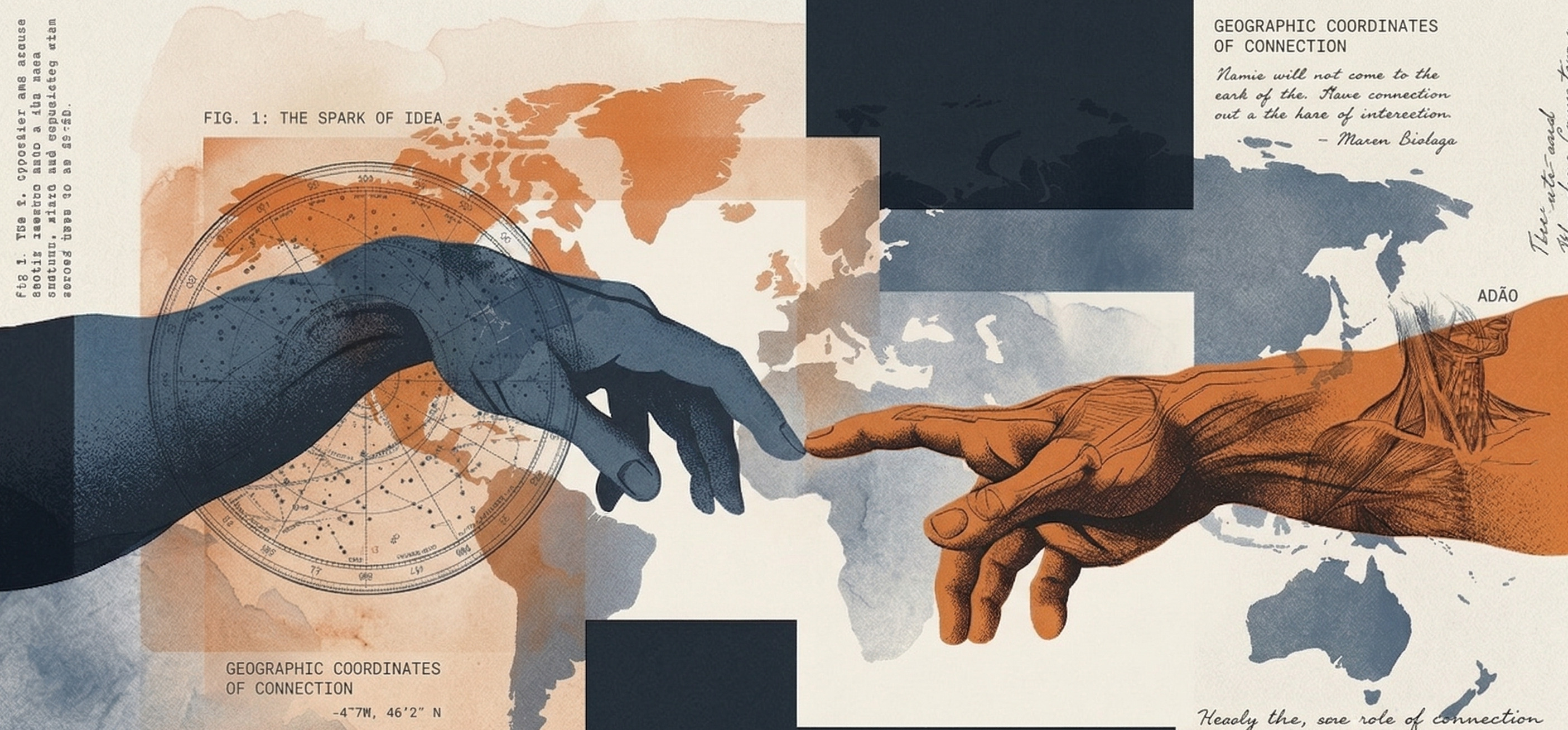
Why most AI projects disappoint.
Most digital projects fail not because of bad technology — but because no one mapped how the people actually work before writing the first line of code.
Strategy consultants hand off documents to developers who never understood the context. Agencies build what was specified, not what was needed. Software vendors sell licences and leave. The result is predictable: a system that technically works and practically doesn't get used. The Excel spreadsheets multiply. The workarounds accumulate. The investment sits idle.
We've watched this happen for 25 years across different industries, different countries, always the same structural fracture. When you install a new capability into a system that was never redesigned to receive it, the system doesn't evolve. It breaks. And the breaks are invisible at first — slower decisions, confused teams, duplicated work, quality declining disguised as output increasing.
We fix this differently. We own the full journey — from understanding how your people work to shipping a system that fits their natural behaviour. We measure success by adoption, not by delivery.
This is what Intelligence by Design means in practice: intelligence is not added to a system after it is built — it is designed into it from the first conversation. And it is why our principle is Strategy Before Code. The order is not a preference. It is the method.
Who we build for.
The Studio serves two distinct profiles, with different needs and different conversations.
For CEOs of growing companies
You don't have an internal team to build solutions. You have a problem — a process that doesn't scale, a bottleneck that slows everything down, a manual workflow that costs time your business doesn't have. You need someone who can own the entire journey: understand the problem, design the solution, build it, and make sure your team actually uses it. That is what the Studio does.
For CTOs and technical leaders
You understand how to build with AI, but you want the thinking behind it to be sound — not just technically functional but cognitively coherent. You want to understand how to design agents using Context Design Thinking and Prompt Design Thinking, how to build systems that interact with humans in ways that feel natural rather than mechanical, and how to avoid the common failure modes of AI implementation at scale. The Studio offers consultancy and co-design for teams that can build but want to build better.
One thing is the same for both profiles: we are a partner, not a vendor. We don't deliver reports. We deliver systems that work — built in weeks, not discovered over quarters of discovery workshops.
Three capabilities.
one integrated approach.
Intelligent systems
We help organisations understand where AI creates real value — and where it doesn't. Then we build the systems that deliver on the ones that matter. This includes AI readiness assessment, custom AI agent development, process automation, and transformation roadmaps that sequence change in a way your organisation can actually absorb. We never recommend a tool without first understanding the people who will use it.
Digital products and platforms
Applications, platforms, and internal tools built from user behaviour inward — not from technical constraints outward. We start with how your people work, where they lose time, what they avoid doing because the current system makes it harder than it should be. The product emerges from that understanding. This approach produces tools that people adopt without extensive training because the tool already thinks the way they think.
Data systems
Unstructured information turned into actionable intelligence. Document processing that extracts and classifies without human intervention. Knowledge management systems that preserve institutional memory and make it searchable. Reporting automation that gives decision-makers the data they need without requiring someone to compile it manually every week. Analytics platforms that surface signals rather than just displaying numbers.
Four phases.
continuous collaboration.
The process is not a handoff sequence. At each phase, we work together — which is why the outcome fits the reality of your organisation rather than the assumptions we brought into the room.
Understand
We don't start with requirements. We start with observation. Who does what? Where does time disappear? What workaround exists because the official process doesn't actually work? What does the Excel file that everyone uses but nobody admits to using contain? This is the phase most projects skip to save time — and the phase whose absence explains most failures. We don't skip it.
Design
Together, we shape the solution. Technical architecture, user flows, integration points, and project structure — all validated with you before a single line of code is written. We show you what we're going to build and why, and we adjust based on your knowledge of the business before we commit to execution. No surprises later because there are no assumptions now.
Build
Iterative development with continuous feedback. We ship in cycles, test with real users, and adjust based on what actually works — not what we assumed would work. You see progress every two weeks. You course-correct in real time. The system that gets delivered is the one that fits your reality, not the one that fit our initial proposal.
Evolve
Products are never finished. We help you operationalise the system, train your teams, and establish feedback loops that keep the system evolving as your business grows and changes. We stay involved because adoption is not a one-time event — it is a capability that develops over time.
Real problems we've solved.
Each of the following represents a pattern we've seen repeatedly across industries. The details differ. The structural problem is usually the same.
Document and invoice processing
→ See full caseFinance and administrative teams losing 8 to 15 hours per week to manual document handling. We build agents that read, extract, validate, and route — without human intervention on the routine cases.
Knowledge management
→ See full caseCritical institutional knowledge living in people's heads, in email threads, in folders no one has opened since the person who created them left. We build semantic search systems that make organisational knowledge findable, shareable, and persistent.
Proposal automation
→ See full caseSales teams spending 3 to 6 hours on every proposal. We build systems that take a natural language briefing, pull context from CRM, and produce a review-ready proposal in under 30 minutes.
Financial reporting
→ See full caseManagement reports compiled manually every week or month. We build reporting pipelines that surface the right data at the right time without requiring a person to assemble it.
Contract review
→ See full caseLegal teams spending hours on document review that follows predictable patterns. We build agents that identify relevant clauses, flag anomalies, and produce structured summaries — with full human oversight on the judgment calls.
What's possible when people are part of the process.
These figures reflect what we've seen across engagements when the implementation follows the process above. Results vary by context, starting point, and the complexity of the processes involved.
Up to 80% reduction in manual document processing time. Up to 85% of routine customer or internal enquiries handled without human intervention. Up to 60% faster onboarding for new team members. Proposal generation reduced from 4 hours to under 30 minutes. Management reporting from a half-day task to an automated daily output.
The numbers are real. The range is honest. What makes the difference between the low end and the high end is always the same thing: how well the system was designed around the people who use it.
Why not a large consultancy?
A large consultancy will charge you €150k–200k and deliver a strategy document in six months. We charge €30k–100k and deliver a working system. The difference is not just price.
They start with the technology and ask the business to adapt. We start with the business strategy and the people, and technology serves what they need. They call it “AI adoption.” We call it Intelligence by Design — because intelligence is designed in from day one, not retrofitted after the fact.
The other difference: the senior people who pitch you are not the people who build the system. At Bitsapiens, the people who scope your project are the people who build it — augmented by AI, not replaced by junior teams supervised from a distance.
Frequently asked questions about the Studio.
Do you do AI consulting or AI development?
Both, and the separation rarely makes sense in practice. Strategy without execution is a document. Execution without strategy is waste. We think and build in the same team, which means the system that gets built actually reflects the thinking that preceded it.
Can you integrate with our existing systems?
Yes. We work with existing ERPs, CRMs, databases, and APIs. We build to complement what you have, not to replace everything at once. The starting point is always understanding what you already use and how — then designing around it rather than against it.
What's the minimum engagement size?
We start with a discovery session to assess fit and scope. Minimum project scope is typically 6 to 8 weeks. We don't do one-week assessments that produce a report and leave — because that's the model that produces the failures we described above.
Do you work in Portuguese?
Yes. Our main team is in Lisbon and we work in Portuguese with clients in Portugal and other Portuguese-speaking markets.
How do you handle data security and privacy?
Systems run on infrastructure that you control or on dedicated private environments. No proprietary data goes to public AI services without your explicit configuration and consent. We work within GDPR and can support EU AI Act compliance requirements.
What happens after the system is built?
We stay involved. Phase 4 of our process is ongoing — training teams, measuring adoption, adjusting based on real usage. We don't consider a project finished when the system is delivered. We consider it finished when the system is genuinely used.
A different kind of conversation.
If you have a specific operational problem that you've never managed to solve well — a process that consistently disappoints, a bottleneck that resists every solution you've tried — we have a proposal.
Tell us the problem. We'll build a working prototype. You only pay if you want to keep it.
No pitch. No proposal before proof. Just a conversation about your problem and a demonstration of what's possible.
→ Start the conversationReady to build something that actually works?
Let's start with your team, not a sales pitch about ours.
BOOK A DISCOVERY CALL